

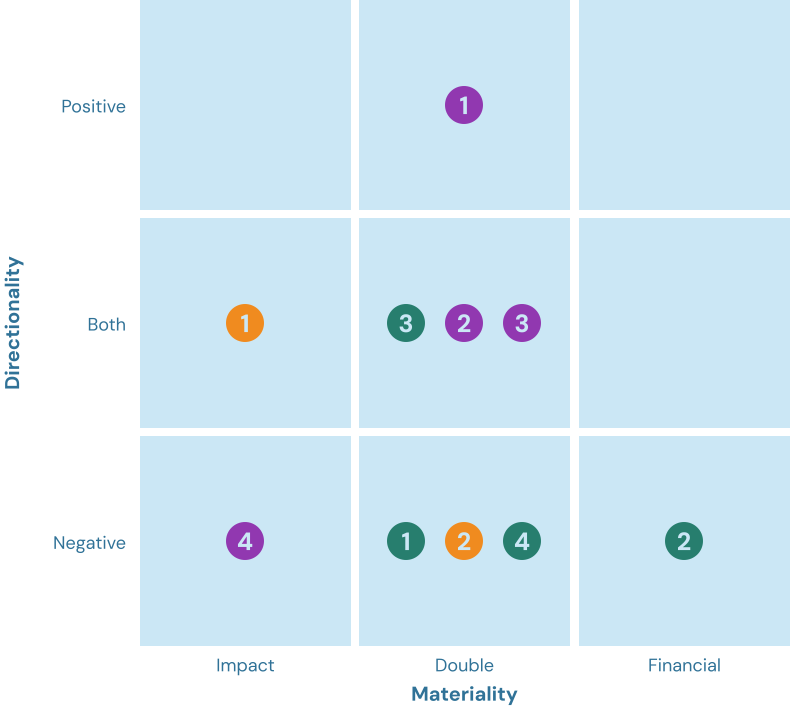
Topics are grouped into three areas, Environment, Social, and Governance & Business, and are arranged in alphabetical order. To capture both the impact and the financial dimension, as well as the positive and negative directionality of the topics, the matrix is visualized as a three-by-three grid.
Each topic group is indicated by these colors:
Environment in green
Social in purple
Governance & Business in orange
Topics are considered material if there is a material negative or positive impact, risk or opportunity associated with the topic. The table presented here indicates which positive or negative impacts (I- and I+), risks (R), or opportunities (O) have been defined for each of the material topics. The topics map the matrix based on these IROs. Impacts map to the Impact materiality dimension. Risks (negative) and Opportunities (positive) map to Financial materiality. The impacts, risks and opportunities that define each material topic are explained later in this section.
|
|
Topic |
|
IROs |
||||||
|---|---|---|---|---|---|---|---|---|---|---|
|
|
Biodiversity and nature |
|
I- |
|
I+ |
|
R |
|
O |
|
|
Climate change adaptation |
|
I- |
|
I+ |
|
R |
|
O |
|
|
Climate change mitigation |
|
I- |
|
I+ |
|
R |
|
O |
|
|
Water management |
|
I- |
|
I+ |
|
R |
|
O |
|
|
Access to health and nutrition solutions |
|
I- |
|
I+ |
|
R |
|
O |
|
|
Inclusion and belonging |
|
I- |
|
I+ |
|
R |
|
O |
|
|
Labor conditions and human rights |
|
I- |
|
I+ |
|
R |
|
O |
|
|
Occupational health and safety |
|
I- |
|
I+ |
|
R |
|
O |
|
|
Corporate culture |
|
I- |
|
I+ |
|
R |
|
O |
|
|
Product quality, safety, and impact |
|
I- |
|
I+ |
|
R |
|
O |


