


Set-up of the compensation of the Executive Committee
Compensation philosophy
At dsm-firmenich, our remuneration philosophy reflects who we are: a company committed to improving wellbeing and driving sustainable progress. Rewarding performance is not just about numbers: it’s about recognizing contributions that benefit stakeholders, society, and the planet. Our approach is built on three pillars: fairness, competitiveness, and long-term value creation. We offer market-relevant compensation to attract and retain talent, linking rewards to financial results and our sustainability goals, securing our license to operate.
The remuneration structure has a long-term focus and combines fixed and variable elements to motivate and recognize strong contributions. Incentive programs support ambitious targets, reinforcing strategic priorities and allowing our employees to share in our success.
For shareholders and other stakeholders, this means a structure that drives performance responsibly, fosters engagement, and secures dsm-firmenich’s future. We believe the design is balanced compared to peers and industry benchmarks and that it supports our strategic priorities. The key elements of our compensation philosophy and implementation guidelines are set out in the overview below.
Reward long-term stakeholder value: Remuneration strategies and outcomes are tied to the purpose of the company and reflect the long-term value created for its varied stakeholders. |
|
Simplicity and transparency: Straightforward design and transparent communication to all stakeholders are essential. |
|---|---|---|
Fair and competitive rewards: Reward opportunities reflect competitive practices of peer companies, guaranteeing pay equity and competitiveness of total remuneration, securing pay for performance, and rewarding superior, sustainable value creation. |
|
Alignment with applicable governance practices: Our rewards methodology reflects appropriate best practice and corporate governance standards. |
Aligned with Group strategy and sustainability ambitions: Group performance and leadership in sustainability commitments are reflected in the design of rewards. |
|
Individual choice and diversity: We strive to enable our people to make personal choices regarding benefit offerings in line with their needs throughout different phases of life. |
Benchmarking
Compensation for the Executive Committee is benchmarked against the market to ensure that we attract and retain talented leaders and remain competitive. This includes a quantitative review of remuneration levels as well as a qualitative review of best practices and developments regarding remuneration in the public domain. A labor market peer group (see table below) has been defined. The peer group includes manufacturing companies headquartered in Europe (a mix of Switzerland, the Netherlands, and other countries); US companies are excluded. Acknowledging recommendations by shareholder representatives, selected peer-group companies are comparable in size and complexity. Indicators considered in this respect are market capitalization, revenue, and number of employees.
Company |
|
Country |
|---|---|---|
ABB |
|
Switzerland |
AkzoNobel |
|
Netherlands |
Alcon |
|
Switzerland |
ASML Holding |
|
Netherlands |
Beiersdorf |
|
Germany |
Chocoladefabriken Lindt & Sprüngli |
|
Switzerland |
Danone |
|
France |
Givaudan |
|
Switzerland |
Heineken |
|
Netherlands |
Henkel |
|
Germany |
Kerry Group |
|
Ireland |
Koninklijke Philips |
|
Netherlands |
Lonza Group |
|
Switzerland |
Merck KGA |
|
Germany |
Reckitt |
|
United Kingdom |
Sika |
|
Switzerland |
Positioning
Total Direct Compensation opportunity for the CEO has been positioned around the median of the peer group. There is a strong focus on long-term value creation in the pay-mix design: the maximum payout can only be achieved by delivering exceptional performance.
This approach also applies to the other Executive Committee Members and serves as the remuneration reference for existing and future Executive Committee appointments, considering the scope and responsibilities of the role. Total remuneration for the individual Executive Committee Members is around the median of the peer group.
Base salary |
|
Pension & other benefits |
|
Short-Term Incentive |
|
Long-Term Incentive |
|
Shareholding obligation |
|---|---|---|---|---|---|---|---|---|
Purpose and link to strategy |
||||||||
Fixed pay considering scope of the role, competencies and skill set |
|
Securing health and well-being, risk protection, and post-employment income |
|
Incentive aligning short-term business objectives/drivers with strategic company objectives. Driving pay for performance |
|
Focus on long-term value creation, ensuring that business decisions are in the long-term interests of all stakeholders |
|
Aligning the reward of Executives with the interests of stakeholders |
Vehicle/delivery |
||||||||
Cash |
|
Subject to plan rules (cash settled) |
|
Cash |
|
Performance Share Units (PSUs); three-year vesting period subject to predefined goals and targets |
|
Executive Committee Members obliged to hold company shares |
Timing |
||||||||
Monthly |
|
Subject to plan rules |
|
Accrual in respective financial year. Pay-out in April of consecutive year |
|
Performance and vesting period: three consecutive financial years, starting with the year of grant |
|
Five years to meet the obligation |
Opportunity |
||||||||
Considering responsibilities of the role, market competitiveness, internal equity and competences |
|
Broadly aligned with the wider workforce (in country of employment) and considering market practice |
|
Target level (in % Annual Base Salary):
Minimum pay-out is 0%, maximum pay-out is capped at 200% of target. Threshold: No STI pay-out if actual Adjusted EBITDA is less than 75% of budgeted Adjusted EBITDA |
|
Target level (in % Annual Base Salary):
Maximum vesting capped at 150% or 200% of target |
|
In % Annual Base Salary
|
Performance measures |
||||||||
Changes to be based on changes in responsibilities, performance, contribution, market developments, and benchmarking |
|
|
|
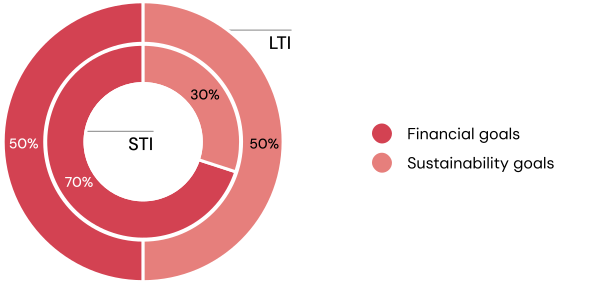
Targets are set by the Board of Directors considering financial and sustainability goals. Their respective weighting is as follows: |
|
Exposure to dsm-firmenich share price |
||
Pay-mix
The direct compensation of the Executive Committee Members is approved by the Board of Directors. It comprises:
Total Direct Compensation (base salary, Short-Term Incentive, Long-Term Incentive)
Benefits, including pension benefits and risk insurances, company car, and social security contributions
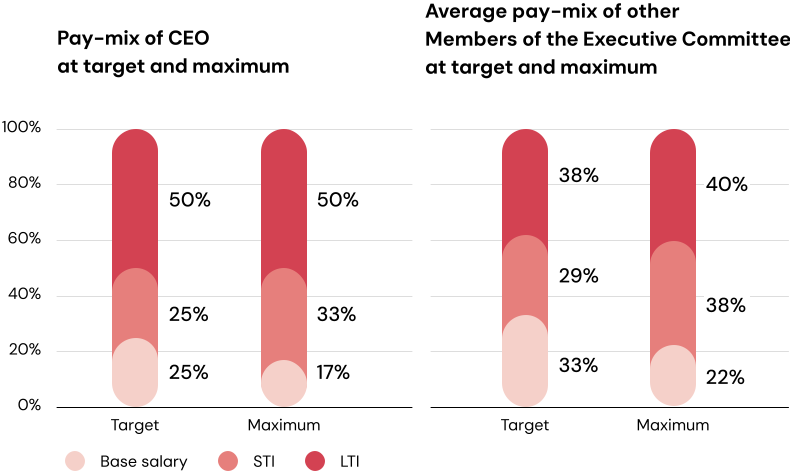
Total Direct Compensation is strongly linked to the short- and long-term success of the company. The incentive plans are designed to link reward opportunities to business performance. For the CEO, 75% of the at-target Total Direct Compensation is linked to incentive programs. Outstanding business performance and achievements may result in pay-out or vesting above target, while performance that remains below expectation results in a pay-out below target or a (partial) forfeiture of LTI grants. Each of the components is further explained hereafter. The graph below provides an overview of the applicable pay-mix.
Base salary
With reference to the Total Direct Compensation benchmark, base salary is set acknowledging the scope of responsibilities, competencies and skill set, and competitive market data. It is the foundation for determining the Short- and Long-Term Incentive opportunity. Base salary is reviewed annually and may be adjusted considering the responsibilities in the role, performance, and contribution of the Executive Committee Members as well as market movements.
Pension and other benefits
The CEO participates in an international pension plan, while the Members of the Executive Committee participate in the local pension plan of the country in which their employment resides. The benefits to be accrued under the respective (international) plans are similar to the plans applicable to the workforce in the respective countries (the international plan mirrors the Swiss pension scheme).
Typical other benefits include a company car and risk insurances in the event of death in service or full disability. In specific situations, temporary housing or typical expatriation benefits may be foreseen.
Short-Term Incentive
The Short-Term Incentive (STI) scheme is designed to reward short-term (operational) performance within the long-term objective of creating sustainable value and growth, considering the interests of all stakeholders. For at-target performance, the annual STI opportunity amounts to 85% or 100% of annual base salary. The maximum pay-out is capped at 200% of target.
For each goal, a target will be set corresponding to a 100% pay-out. In addition, a floor defines the level of performance below which no pay-out will be made, while the cap represents the level of performance at which the maximum pay-out is 200% of the target opportunity. Pay-out levels between floor, target, and the cap are calculated by linear extrapolation.
In determining the target achievement, the Board of Directors shall assess whether the result is fair given business circumstances and may, at their sole discretion, adjust achievement accordingly. The STI is subject to an overall threshold. If the actual Adjusted EBITDA over the performance year does not reach 75% of the budgeted Adjusted EBITDA of the year, no STI will be awarded at all.
Long-Term Incentive
The Long-Term Incentive (LTI) is designed to ensure long-term value creation and alignment with the interests of all stakeholders and to support the retention of talented leaders.
The LTI scheme is a rolling cliff plan covering a three-year performance period. Any grant is subject to goals set by the Board of Directors. For each goal, a target will be set corresponding to the level of performance that will result in an at-target vesting (i.e., 100% achievement of the target). In addition, a floor defines the level of performance below which no vesting will take place, while the cap represents the level of performance at which the maximum vesting is earned. Achievement between floor, target, and the maximum is calculated by linear extrapolation. Final assessment of target achievement is at the sole discretion of the Board of Directors.
The at-target grant level for the CEO represents 200% of base salary; maximum vesting is capped at 150% of target. For other Executive Committee Members, the at-target grant is set at 120% or 100% of base salary, with maximum vesting capped at 150% or 200% of target respectively.
Main plan features:
Grant of Performance Share Units (PSUs), i.e., the right to receive – upon vesting – one ordinary dsm-firmenich share for each PSU, provided the vesting criteria are met
Vesting is subject to continued employment and the achievement of the performance goals set for the respective grant
In specific situations, also the grant of Restricted Share Units (RSUs) is possible; vesting is subject to continued employment only
Vesting and holding period: three years starting from the grant date
Performance period: three financial years starting on January 1 of the year of grant
The number of share units to be granted is determined by the base salary at the grant date and the average share price over the reference period to be set by the Board of Directors
At vesting, Grantees may elect a sell-to-cover in order to settle the withholding of social security contributions and withholding of taxes due at the vesting date
Share ownership guidance
To align the interests of the Executive Committee Members even further with those of our stakeholders, the Members of the Executive Committee are required to hold a minimum multiple of their annual base salary in dsm-firmenich ordinary shares equivalent to:
CEO: three times annual base salary
Other Members: one annual base salary
The required value must be accrued within a five-year period. Only shares in the form of fully vested shares obtained upon the vesting of share units granted under a Company program or shares privately acquired on the open market are considered.
Goal-setting
A broader set of key performance indicators is in place for dsm-firmenich, some of which feature in our incentive programs. This relates to targets that reflect our financial performance and sustainability goals, since bringing progress to life goes hand in hand with profitable growth. The design of our Short- and Long-Term Incentive plans emphasizes the importance of building long-term growth opportunities. Our goals underpin our commitment to contribute to a better world, while at the same time generating profitable growth in line with our key strategic goals.
Concerning our incentive programs, the Board of Directors will set goals, their weight, and targets (i.e., the metric to be achieved). The weighting shall reflect the importance of both financial and sustainability aspirations. In doing so, the Board of Directors may respond in an agile way to business needs and/or strategy adjustments in a changing environment. In doing this, the Board of Directors shall:
Derive goals from the company strategy
Focus on objectives instrumental to achieving long-term value creation
Consider historical performance, business outlook and circumstances, and priorities
Take into account stakeholders’ expectations
Ensure that targets are stretching, in order to drive competitive advantage while discouraging excessive risk-taking
No individual goals are included.
Following the end of an applicable performance period, the Board of Directors will compare the actual performance with the targets that were set and will assess whether the result is considered fair given (business) circumstances and may at their sole discretion, adjust achievement accordingly.
Within the limits of business-sensitive information, dsm-firmenich will give stakeholders insight into target-setting and achievement.
Employment terms and conditions
All employment agreements of the Members of the Executive Committee include a clause prohibiting (changes in) pay to be executed if such (change in) remuneration is not included in the maximum amount of remuneration approved by the General Meeting.
Members of the Executive Committee have an employment agreement for an indefinite period of time and are subject to a notice period of six or twelve months. During this period (unless there has been a termination for cause), entitlement to base salary and STI continues. Unvested Long-Term Incentives grants are forfeited on the effective date of a resignation or termination for cause. In other cases of a termination of employment, unvested LTI grants will vest on a pro rata basis on the effective date of such termination.
In accordance with Swiss law, no severance payments or change-in-control provisions are agreed or paid. The employment arrangements of the CEO and the Members of the Executive Committee include non-compete as well as non-solicitation clauses.
Non-compete provisions will be activated on a case-by-case basis and are in line with the Swiss Code of Obligations and shall not exceed a period of 12 months. Indemnities in view of a non-compete will consider base salary and benefits only (over the term the non-compete applies). The Board of Directors may, at its discretion, recover variable remuneration awarded on the basis of incorrect data, provided that such recovery is required by law and/or will result in the re-statement of annual accounts. This right of recovery shall expire three years from the date of the adoption by the General Meeting of the annual accounts in which the (last instalment of the) applicable variable remuneration has been accounted for.
Compensation of the Executive Committee in 2025
Composition of the Executive Committee
As referred to in the Introduction to this Compensation report, a few changes in the composition of the Executive Committee occurred in 2025. Laetitia Pictet, Chief Legal, Risk and Compliance Officer, took over from Jane Sinclair, who stepped down effective May 1, 2025. In response to the carve-out of the Animal Nutrition Health business and addressing its standalone status, Ivo Lansbergen stepped down from the Executive Committee effective October 1, 2025. This report includes the compensation of Jane Sinclair, Laetitia Pictet, and Ivo Lansbergen for the duration of their terms as Member of the Executive Committee in 2025.
Base salary
Base salaries were adjusted in line with observed market movements. On an annual basis, the CEO’s base salary was, with effect from April 1, 2025, adjusted to CHF1,425,263. This represents an increase of 3% compared to 2024 (CHF1,383,750). Similar adjustments applied for other Executive Committee Members.
Pension and other benefits
The total contribution to the pension plan for the CEO amounted to €200,698; CHF value, 186,930 (2024: €192,086 CHF Value: 180,791). For the other Members of the Executive Committee, the amount is €1,181,972 (CHF Value: 1,100,889). The total spend on other benefits, such as a company car and risk insurances in the event of death in service or full disability, as well as housing and other benefits associated with international assignments, amounted to €1,819,277 (CHF Value: 1,694,475).
Short-Term Incentive (STI)
On an annual basis, the at-target STI opportunity is set at 100% of base salary for the CEO. The at-target STI for other Members of the Executive Committee is set at 85% or 100% of base salary on an annual basis. The maximum pay-out is capped at 200% of the at-target opportunity. Goals have been defined by the Board of Directors; for each goal (overview below), a target and pay-out curve are defined:
If the defined target is achieved, the pay-out is equal to the at-target percentage times base salary times the weight assigned to the respective goal
A minimum floor is set for each goal; an achievement below this threshold results in no pay-out
Over-performance results in a pay-out exceeding 100%, where the maximum achievement is capped at 200% of the ‘at-target’ weighting of the respective goal
Between floor and target and between target and cap, a linear extrapolation determines the achievement and pay-out.
In case of a ‘Safety fatality’, the Safety target will not result in a pay-out. If the actual Adjusted EBITDA over the performance year does not reach 75% of the budgeted Adjusted EBITDA of the year, no STI will be awarded at all.
We have a focus on (organic) growth based on our scientific backbone and innovations. Sales growth is a yardstick to measure progress in this respect. Strong EBITDA performance and cash flow ensure profitability and liquidity to enhance innovations and to explore new opportunities. Our employees are the backbone of our success. Their well-being in the organization is vital to realize our objectives, making safety and engagement of our workforce important parameters.
Goal type |
|
Goal |
|
Weight |
|
Definition |
|---|---|---|---|---|---|---|
Financial goals |
|
Adjusted EBITDA (constant currency) |
|
35% |
|
The IFRS metric operating profit plus depreciation, amortization, and impairments, adjusted for material items of profit or loss, as defined under ‘APM adjustments’ |
|
Adjusted gross operating free cash flow |
|
15% |
|
Adjusted EBITDA, adjusted for intrinsic changes in the working capital, minus capital expenditures. This metric is based on continuing operations |
|
|
Organic sales growth |
|
20% |
|
Sales growth, excluding the impact of acquisitions, divestments, and currency changes |
|
Sustainability goals |
|
Safety |
|
15% |
|
Total Recordable Incidents Rate: (i) including supervised and non-supervised contractors and (ii) excluding health and security incidents |
|
Employee Engagement |
|
15% |
|
Employee engagement: Degree to which employees are passionate about their work and find it meaningful |
STI achievement
We are an innovation-focused consumer company, leveraging our unique portfolio and capabilities to further strengthen our position as a global leader in nutrition, health, and beauty.
We delivered good progress across our continuing operations this year. Performance was solid, supported by synergy delivery and healthy cash generation. We launched our Sustainability Program with renewed 2030 targets, showing that doing business and driving sustainability go hand in hand.
Our innovative solutions continue to play a critical role in essential, everyday consumer products, underscoring the strength of our portfolio. The macroeconomic backdrop in the second half of 2025 impacted the results. While we saw solid sales growth in the first half of the year, this was offset in the second half. Adjusted EBITDA and cash flow (both at constant currency) ended below target. On Safety, we met our target and remain fully committed to further improvement. The fatality we tragically recorded was caused by a third party, who is prosecuted by the authorities. dsm-firmenich has not been held responsible for any safety violation. Our Engagement Scores remained very strong, increasing even with 1% versus previous year, as did overall participation of our employees. This STI target has been met. The commitment of our people is a cornerstone of our company’s success.
Goal |
|
Weight |
|
Target |
|
Actual |
|
Achievement |
|
Pay-out in % |
||||||
|---|---|---|---|---|---|---|---|---|---|---|---|---|---|---|---|---|
Adjusted EBITDA at constant currency1 |
|
35% |
|
€2,450m |
|
€2,409m |
|
79.5% |
|
27.8% |
||||||
Adjusted gross operating free cash flow2 |
|
15% |
|
€1,525m |
|
€1,476m |
|
86.0% |
|
12.9% |
||||||
Organic sales growth |
|
20% |
|
6% |
|
3% |
|
0% |
|
0.0% |
||||||
Safety (TRI) |
|
15% |
|
≥0.24–≤0.26 |
|
0.26 |
|
100% |
|
15.0% |
||||||
Employee engagement |
|
15% |
|
≥75–≤80 |
|
0.80 |
|
100% |
|
15.0% |
||||||
Total 2025 |
|
100% |
|
|
|
|
|
|
|
70.7% |
||||||
Total 2024 |
|
100% |
|
|
|
|
|
|
|
175.0% |
||||||
|
||||||||||||||||
|
|
Year |
|
€ |
|
CHF Value |
|---|---|---|---|---|---|---|
Dimitri de Vreeze, CEO |
|
2025 |
|
1,067,662 |
|
994,420 |
|
|
2024 |
|
2,526,299 |
|
2,377,753 |
ExCo Members, excl. CEO |
|
2025 |
|
3,520,489 |
|
3,278,983 |
|
|
2024 |
|
8,576,309 |
|
8,072,021 |
Former ExCo Members |
|
2025 |
|
– |
|
– |
|
|
2024 |
|
590,427 |
|
555,710 |
Total Executive Committee |
|
2025 |
|
4,588,151 |
|
4,273,403 |
|
|
2024 |
|
11,693,035 |
|
11,005,484 |
Long-Term Incentive (LTI)
The 2025 grant was implemented March 31, 2025. The performance period starts on 1 January 2025 and ends on December 31, 2027. The vesting is set for March 31, 2028. PSUs have been granted to the Members of the Executive Committee, subject to the goals (as included in the next section).
On an annual basis, the at-target LTI opportunity for the CEO is set at 200% of base salary (vesting is capped at 150% of the number of PSUs granted at-target). For other Members of the Executive Committee, the at-target grant is set at 120% of base salary (vesting is capped at 150% of the number of PSUs granted at-target) or at 100% of base salary (vesting is capped at 200% of the number of PSUs granted at-target).
The 2025 grant is implemented by dividing the at-target grant value (% of base salary) by the average opening price of the share on the Amsterdam stock exchange over the reference period (i.e., €97.97). The table below provides an overview of the number of share units granted, the face value of such grant (opening price on the date of grant) as well as the fair value calculated at grant date (according to IFRS rules).
|
|
Year |
|
Number of PSUs granted |
|
Face value |
|
Fair value |
||||
|---|---|---|---|---|---|---|---|---|---|---|---|---|
|
|
|
|
€ |
|
CHF Value |
|
€ |
|
CHF Value |
||
Dimitri de Vreeze, CEO |
|
2025 |
|
30,009 |
|
2,744,623 |
|
2,556,342 |
|
2,525,557 |
|
2,352,304 |
|
|
2024 |
|
29,609 |
|
3,148,029 |
|
2,962,925 |
|
2,910,565 |
|
2,739,424 |
ExCo Members, excl. CEO |
|
2025 |
|
56,969 |
|
5,210,385 |
|
4,852,952 |
|
4,794,511 |
|
4,465,608 |
|
|
2024 |
|
60,677 |
|
6,451,179 |
|
6,071,849 |
|
5,964,549 |
|
5,613,834 |
Former ExCo Members |
|
2025 |
|
– |
|
– |
|
– |
|
– |
|
– |
|
|
2024 |
|
– |
|
– |
|
– |
|
– |
|
– |
Total Executive Committee |
|
2025 |
|
86,978 |
|
7,955,008 |
|
7,409,294 |
|
7,320,068 |
|
6,817,912 |
|
|
2024 |
|
90,286 |
|
9,599,208 |
|
9,034,774 |
|
8,875,114 |
|
8,353,258 |
Overview of goals and targets 2025 LTI grant
Goals (overview below) are set by the Board of Directors. Combining the essential, the desirable, and the sustainable to bring progress to life is translated into our LTI targets. Total Shareholder Return is an indicator of how we perform against the business segments in which we operate. Strong ROCE performance drives our investment and growth initiatives. Sustainability is a business driver and core responsibility, determining our license to operate. Reducing our own and our customers’ greenhouse gas emissions is one of the areas in which we can make a difference. We empower our people to thrive in the business. Improving on Inclusion & Belonging fosters new perspectives, enabling us to respond more quickly and flexibly to global trends. It also encourages (product) innovations while attracting and retaining the best talent.
Goal Type |
|
Goal |
|
Weight |
|
Definition |
|---|---|---|---|---|---|---|
Financial goals |
|
Total Shareholder Return (TSR) |
|
25% |
|
Sum of capital gain and dividends paid, representing the total return to shareholders; the relative ranking (within the peer group) reflects the overall performance relative to our peers |
|
Core Return on Capital Employed (CROCE) |
|
25% |
|
Operating profit as percentage of weighted average capital employed adjusted for depreciation and amortization of merger-related accounting adjustments and Alternative performance measures (APM) adjustments |
|
Sustainability goals |
|
Absolute greenhouse gas reduction |
|
25% |
|
Absolute greenhouse gas emissions reduction of Scope 1 & 2 as well as Scope 3 emissions aligned with the SBTi-validated line of dsm-firmenich |
|
Inclusion & Belonging |
|
25% |
|
Gender and nationality diversity of dsm-firmenich’s Global Management Team (GMT) |
For each goal, a pay-out curve is defined:
If the defined target is achieved, the vesting shall be equal to the number of granted PSUs at-target times the weight assigned to the respective goal
A minimum floor is set for each goal; an achievement below this threshold results in no vesting related to the relevant goal
Over-performance results in a vesting exceeding the at-target level, where the maximum achievement is capped at 150% or 200% of the at-target weighting of the respective goal
Between floor and target and cap, a linear extrapolation determines the achievement and vesting
Total compensation
With reference to the remarks made in the section on Currency, the total remuneration to the Members of the Executive Committee in 2025, excluding social security contributions, amounts to €22,667,442 (compared to €35,323,388 in 2024), as included in the tables below. No loans were provided to Members of the Executive Committee, and no payments have been made by any subsidiary of the Company. Neither DSM-Firmenich AG nor any of its subsidiaries granted loans/credit facilities or made payments (directly or indirectly) to persons closely connected to the Members of the Executive Committee (Audited).
In € |
|
Year |
|
Base salary |
|
Pension contribution1 |
|
Other benefits2 |
|
Total Fixed Remuneration |
|
Short-Term Incentive (STI)3 |
|
Number of PSUs granted4 |
|
Face value at grant5 |
|
Total Variable Remuneration |
|
Remuneration excl. social security contribution |
|
Social security contribution6 |
|
Total Remuneration |
||||||||||||||||
|---|---|---|---|---|---|---|---|---|---|---|---|---|---|---|---|---|---|---|---|---|---|---|---|---|---|---|---|---|---|---|---|---|---|---|---|---|---|---|---|---|
Dimitri de Vreeze, CEO |
|
2025 |
|
1,510,131 |
|
200,698 |
|
228,096 |
|
1,938,925 |
|
1,067,662 |
|
30,009 |
|
2,744,623 |
|
3,812,285 |
|
5,751,210 |
|
17,855 |
|
5,769,065 |
||||||||||||||||
|
|
2024 |
|
1,443,599 |
|
192,086 |
|
163,412 |
|
1,799,097 |
|
2,526,299 |
|
29,609 |
|
3,148,029 |
|
5,674,328 |
|
7,473,425 |
|
16,747 |
|
7,490,172 |
||||||||||||||||
ExCo members, excl. CEO |
|
2025 |
|
5,412,205 |
|
1,181,972 |
|
1,552,968 |
|
8,147,145 |
|
3,520,489 |
|
56,969 |
|
5,210,385 |
|
8,730,874 |
|
16,878,019 |
|
1,749,249 |
|
18,627,268 |
||||||||||||||||
|
|
2024 |
|
5,329,305 |
|
1,113,906 |
|
4,905,344 |
|
11,348,555 |
|
8,576,309 |
|
60,677 |
|
6,451,179 |
|
15,027,488 |
|
26,376,043 |
|
1,243,797 |
|
27,619,840 |
||||||||||||||||
Former ExCo Members7 |
|
2025 |
|
– |
|
– |
|
38,213 |
|
38,213 |
|
– |
|
– |
|
– |
|
– |
|
38,213 |
|
2,607 |
|
40,820 |
||||||||||||||||
|
|
2024 |
|
496,937 |
|
75,563 |
|
310,993 |
|
883,493 |
|
590,427 |
|
– |
|
– |
|
590,427 |
|
1,473,920 |
|
262,820 |
|
1,736,740 |
||||||||||||||||
Total Executive Committee |
|
2025 |
|
6,922,336 |
|
1,382,670 |
|
1,819,277 |
|
10,124,283 |
|
4,588,151 |
|
86,978 |
|
7,955,008 |
|
12,543,159 |
|
22,667,442 |
|
1,769,711 |
|
24,437,153 |
||||||||||||||||
|
|
2024 |
|
7,269,841 |
|
1,381,555 |
|
5,379,749 |
|
14,031,145 |
|
11,693,035 |
|
90,286 |
|
9,599,208 |
|
21,292,243 |
|
35,323,388 |
|
1,523,364 |
|
36,846,752 |
||||||||||||||||
|
||||||||||||||||||||||||||||||||||||||||
In € |
|
Year |
|
Base salary |
|
Pension contribution1 |
|
Other benefits2 |
|
Total Fixed Remuneration |
|
Short-Term Incentive (STI)3 |
|
Number of PSUs granted4 |
|
Face value at grant5 |
|
Total Variable Remuneration |
|
Remuneration excl. social security contribution |
|
Social security contribution6 |
|
Total Remuneration |
||||||||||||||||
|---|---|---|---|---|---|---|---|---|---|---|---|---|---|---|---|---|---|---|---|---|---|---|---|---|---|---|---|---|---|---|---|---|---|---|---|---|---|---|---|---|
Dimitri de Vreeze, CEO |
|
2025 |
|
1,510,131 |
|
200,698 |
|
228,096 |
|
1,938,925 |
|
1,067,662 |
|
30,009 |
|
2,744,623 |
|
3,812,285 |
|
5,751,210 |
|
17,855 |
|
5,769,065 |
||||||||||||||||
|
|
2024 |
|
1,443,599 |
|
192,086 |
|
163,412 |
|
1,799,097 |
|
2,526,299 |
|
29,609 |
|
3,148,029 |
|
5,674,328 |
|
7,473,425 |
|
16,747 |
|
7,490,172 |
||||||||||||||||
ExCo members, excl. CEO |
|
2025 |
|
5,412,205 |
|
1,181,972 |
|
1,552,968 |
|
8,147,145 |
|
3,520,489 |
|
56,969 |
|
5,210,385 |
|
8,730,874 |
|
16,878,019 |
|
1,749,249 |
|
18,627,268 |
||||||||||||||||
|
|
2024 |
|
5,329,305 |
|
1,113,906 |
|
4,905,344 |
|
11,348,555 |
|
8,576,309 |
|
60,677 |
|
6,451,179 |
|
15,027,488 |
|
26,376,043 |
|
1,243,797 |
|
27,619,840 |
||||||||||||||||
Former ExCo Members7 |
|
2025 |
|
– |
|
– |
|
38,213 |
|
38,213 |
|
– |
|
– |
|
– |
|
– |
|
38,213 |
|
2,607 |
|
40,820 |
||||||||||||||||
|
|
2024 |
|
496,937 |
|
75,563 |
|
310,993 |
|
883,493 |
|
590,427 |
|
– |
|
– |
|
590,427 |
|
1,473,920 |
|
262,820 |
|
1,736,740 |
||||||||||||||||
Total Executive Committee |
|
2025 |
|
6,922,336 |
|
1,382,670 |
|
1,819,277 |
|
10,124,283 |
|
4,588,151 |
|
86,978 |
|
7,955,008 |
|
12,543,159 |
|
22,667,442 |
|
1,769,711 |
|
24,437,153 |
||||||||||||||||
|
|
2024 |
|
7,269,841 |
|
1,381,555 |
|
5,379,749 |
|
14,031,145 |
|
11,693,035 |
|
90,286 |
|
9,599,208 |
|
21,292,243 |
|
35,323,388 |
|
1,523,364 |
|
36,846,752 |
||||||||||||||||
|
||||||||||||||||||||||||||||||||||||||||
CHF Value |
|
Year |
|
Base salary |
|
Pension contribution1 |
|
Other benefits2 |
|
Total Fixed Remuneration |
|
Short-Term Incentive (STI)3 |
|
Number of PSUs granted4 |
|
Face value at grant5 |
|
Total Variable Remuneration |
|
Remuneration excl. social security contribution |
|
Social security contribution6 |
|
Total Remuneration |
||||||||||||||||
|---|---|---|---|---|---|---|---|---|---|---|---|---|---|---|---|---|---|---|---|---|---|---|---|---|---|---|---|---|---|---|---|---|---|---|---|---|---|---|---|---|
Dimitri de Vreeze, CEO |
|
2025 |
|
1,406,536 |
|
186,930 |
|
212,449 |
|
1,805,915 |
|
994,420 |
|
30,009 |
|
2,556,342 |
|
3,550,762 |
|
5,356,677 |
|
16,630 |
|
5,373,307 |
||||||||||||||||
|
|
2024 |
|
1,358,715 |
|
180,791 |
|
153,803 |
|
1,693,309 |
|
2,377,753 |
|
29,609 |
|
2,962,925 |
|
5,340,678 |
|
7,033,987 |
|
15,762 |
|
7,049,749 |
||||||||||||||||
ExCo members, excl. CEO |
|
2025 |
|
5,040,928 |
|
1,100,889 |
|
1,446,434 |
|
7,588,251 |
|
3,278,983 |
|
56,969 |
|
4,852,953 |
|
8,131,936 |
|
15,720,187 |
|
1,629,251 |
|
17,349,438 |
||||||||||||||||
|
|
2024 |
|
5,015,942 |
|
1,048,408 |
|
4,616,910 |
|
10,681,260 |
|
8,072,021 |
|
60,677 |
|
6,071,850 |
|
14,143,871 |
|
24,825,131 |
|
1,170,662 |
|
25,995,793 |
||||||||||||||||
Former ExCo Members7 |
|
2025 |
|
– |
|
– |
|
35,592 |
|
35,592 |
|
– |
|
– |
|
– |
|
– |
|
35,592 |
|
2,428 |
|
38,020 |
||||||||||||||||
|
|
2024 |
|
467,717 |
|
71,120 |
|
292,707 |
|
831,544 |
|
555,710 |
|
– |
|
– |
|
555,710 |
|
1,387,254 |
|
247,366 |
|
1,634,620 |
||||||||||||||||
Total Executive Committee |
|
2025 |
|
6,447,464 |
|
1,287,819 |
|
1,694,475 |
|
9,429,758 |
|
4,273,403 |
|
86,978 |
|
7,409,295 |
|
11,682,698 |
|
21,112,456 |
|
1,648,309 |
|
22,760,765 |
||||||||||||||||
|
|
2024 |
|
6,842,374 |
|
1,300,319 |
|
5,063,420 |
|
13,206,113 |
|
11,005,484 |
|
90,286 |
|
9,034,775 |
|
20,040,259 |
|
33,246,372 |
|
1,433,790 |
|
34,680,162 |
||||||||||||||||
|
||||||||||||||||||||||||||||||||||||||||
CHF Value |
|
Year |
|
Base salary |
|
Pension contribution1 |
|
Other benefits2 |
|
Total Fixed Remuneration |
|
Short-Term Incentive (STI)3 |
|
Number of PSUs granted4 |
|
Face value at grant5 |
|
Total Variable Remuneration |
|
Remuneration excl. social security contribution |
|
Social security contribution6 |
|
Total Remuneration |
||||||||||||||||
|---|---|---|---|---|---|---|---|---|---|---|---|---|---|---|---|---|---|---|---|---|---|---|---|---|---|---|---|---|---|---|---|---|---|---|---|---|---|---|---|---|
Dimitri de Vreeze, CEO |
|
2025 |
|
1,406,536 |
|
186,930 |
|
212,449 |
|
1,805,915 |
|
994,420 |
|
30,009 |
|
2,556,342 |
|
3,550,762 |
|
5,356,677 |
|
16,630 |
|
5,373,307 |
||||||||||||||||
|
|
2024 |
|
1,358,715 |
|
180,791 |
|
153,803 |
|
1,693,309 |
|
2,377,753 |
|
29,609 |
|
2,962,925 |
|
5,340,678 |
|
7,033,987 |
|
15,762 |
|
7,049,749 |
||||||||||||||||
ExCo members, excl. CEO |
|
2025 |
|
5,040,928 |
|
1,100,889 |
|
1,446,434 |
|
7,588,251 |
|
3,278,983 |
|
56,969 |
|
4,852,953 |
|
8,131,936 |
|
15,720,187 |
|
1,629,251 |
|
17,349,438 |
||||||||||||||||
|
|
2024 |
|
5,015,942 |
|
1,048,408 |
|
4,616,910 |
|
10,681,260 |
|
8,072,021 |
|
60,677 |
|
6,071,850 |
|
14,143,871 |
|
24,825,131 |
|
1,170,662 |
|
25,995,793 |
||||||||||||||||
Former ExCo Members7 |
|
2025 |
|
– |
|
– |
|
35,592 |
|
35,592 |
|
– |
|
– |
|
– |
|
– |
|
35,592 |
|
2,428 |
|
38,020 |
||||||||||||||||
|
|
2024 |
|
467,717 |
|
71,120 |
|
292,707 |
|
831,544 |
|
555,710 |
|
– |
|
– |
|
555,710 |
|
1,387,254 |
|
247,366 |
|
1,634,620 |
||||||||||||||||
Total Executive Committee |
|
2025 |
|
6,447,464 |
|
1,287,819 |
|
1,694,475 |
|
9,429,758 |
|
4,273,403 |
|
86,978 |
|
7,409,295 |
|
11,682,698 |
|
21,112,456 |
|
1,648,309 |
|
22,760,765 |
||||||||||||||||
|
|
2024 |
|
6,842,374 |
|
1,300,319 |
|
5,063,420 |
|
13,206,113 |
|
11,005,484 |
|
90,286 |
|
9,034,775 |
|
20,040,259 |
|
33,246,372 |
|
1,433,790 |
|
34,680,162 |
||||||||||||||||
|
||||||||||||||||||||||||||||||||||||||||
Shareholding obligation
In addition to the vested performance shares, Members of the Executive Committee also invested in dsm-firmenich stock. Stocks were bought through private transactions with private funds. The table below provides an overview of the number of shares held at year-end by the CEO and (aggregated) the Members of the Executive Committee (including Closely Associated Persons). The CEO significantly exceeds the shareholding obligation (300% of base salary). Depending on whether the legacy company had a cash-settled (Firmenich) or equity-settled (DSM) Long-Term Incentive plan, also various Members of the Executive Committee exceed the shareholding obligation (100% of base salary). Executive Committee Members only hold PSUs or shares; potential risks associated with these instruments are therefore not hedged by other financial instruments.
|
|
Number of Shares held |
|
Number of Shares held |
|---|---|---|---|---|
Dimitri de Vreeze, CEO |
|
90,854 |
|
86,933 |
ExCo Members, excl. CEO |
|
94,388 |
|
97,056 |
Total Executive Committee |
|
185,242 |
|
183,989 |
Compensation voting
The General Meeting of May 7, 2024 approved a maximum total amount of remuneration for the Executive Committee of €39,494 million for 2025. In establishing the amount, the Assumed Fx rate (€1 = CHF0.98) was applied.
The approved maximum total amount of remuneration includes the fixed base salary, benefits, and the maximum STI that can be achieved. Regarding the LTI, the amount included represents the at-target value of the grant as a percentage of Annual Base Salary. The number of PSUs is calculated considering the average share price over a reference period. Therefore, the approved maximum amount includes an amount to offset an eventual appreciation of the share price on the grant date compared to the reference period.
An amount of €4,107 million is included for other and unforeseen items. This amount concerns, among other things, obligations toward Executive Committee Members following international assignment arrangements and will otherwise be used to cover unforeseen circumstances such as changes in regulatory requirements. The approved amount does not include any additional tax levies imposed on the employer nor the company-related portion of contributions to social security systems paid in line with applicable laws and regulations in any geography. Foreign exchange rate fluctuations are also not included, nor obligations toward Executive Committee Members confirmed by the legacy companies prior to the appointment into the Executive Committee of dsm-firmenich. This includes, but is not limited to, special payments by Royal DSM and Firmenich SA as referred to in the Offering Circular (issued November 22, 2022) or the vesting of Long-Term Incentives granted prior to the Settlement Date (as such term is defined in the Offering Circular).
As the tables below demonstrate, the total remuneration excluding social security contributions provided in 2025 to all Members of the Executive Committee amounts to €22,667 million (compared to €35,323 million over 2024) and remains within the approved maximum total amount of remuneration of €41,309 million (based on average Fx rate). Considering the Average Fx rate, the total remuneration provided in 2025 amounts to CHF21,238 million (compared to CHF33,653 million over 2024).
|
|
Approved maximum remuneration excluding social security contributions |
|
Actual remuneration excluding social security contributions |
||||
|---|---|---|---|---|---|---|---|---|
x thousand |
|
€ |
|
CHF |
|
€ |
|
CHF |
|
39,494 |
|
38,704 |
|
21,671 |
|
21,238 |
|
Total Remuneration Average Fx rate |
|
41,309 |
|
38,704 |
|
22,667 |
|
21,238 |
|
|
|
|
|
|
|
|
|
|
|
Approved maximum remuneration excluding social security contributions |
|
Actual remuneration excluding social security contributions |
||||
x thousand |
|
€ |
|
€ |
||||
Fixed remuneration & Benefits Average Fx rate |
|
12,269 |
|
9,633 |
||||
Maximum STI accrued over 2025 Average Fx rate |
|
13,671 |
|
4,588 |
||||
LTI (face value at grant date) Average Fx rate |
|
11,073 |
|
7,955 |
||||
Other and unforeseen Average Fx rate |
|
4,296 |
|
491 |
||||
Total remuneration Average Fx rate |
|
41,309 |
|
22,667 |
||||