

After decades of progress, the global fight against malnutrition has suffered a dramatic setback. Mortality linked to undernutrition is rising for the first time in decades, driven by armed conflicts, climate-related disasters, economic shocks following the COVID-19 pandemic, and global inflation.

These pressures were compounded by a sharp reduction in humanitarian funding early in 2025, which curtailed essential nutrition programs in vulnerable regions. Today, an estimated 45 million children under five suffer from wasting, while more than four billion people experience deficiencies in essential micronutrients. The reversal of long-held gains underscores the urgent need for targeted, science-driven interventions to restore health outcomes and build resilience against future crises.
Nutrition improvement
In response, dsm-firmenich is leveraging its Nutrition Improvement segment to address critical micronutrient gaps, with the ambition of reaching one billion people worldwide by 2030.
Our strategy combines the large-scale fortification of staple foods, such as rice and flour, with public health supplementation programs for vulnerable populations. In addition, we deploy emergency therapeutic foods in crisis situations, ensuring immediate relief while creating long-term pathways for healthier diets. These interventions do more than correct nutritional deficiencies; they also shape future markets, cultivating demand for fortified and nutrient-rich products and supporting sustainable economic development.
Through public health supplementation and fortification, we work with partners to deliver science‑based solutions that improve nutrition today and unlock healthier, more economically resilient communities tomorrow.
Working with the UNIMMAP
A great example of our impact is the UN International Multiple Micronutrient Antenatal Preparation (UNIMMAP) Multiple Micronutrient Supplementation (MMS) program. Designed to provide essential vitamins and minerals during pregnancy, the program addresses deficiencies that contribute to poor birth outcomes and maternal health complications. We played a key role in both the development and acceleration of access to MMS, applying our scientific expertise, formulation knowledge, and global reach to ensure high-quality production at scale. This meant we could distribute to the populations most in need, transforming maternal and child health outcomes in multiple regions. By combining innovation, evidence-based strategies, and global partnerships, we are demonstrating how science-driven interventions can reverse trends in malnutrition, improve diets, and establish the foundation for healthier, more resilient populations.
Our ongoing partnership with the WFP
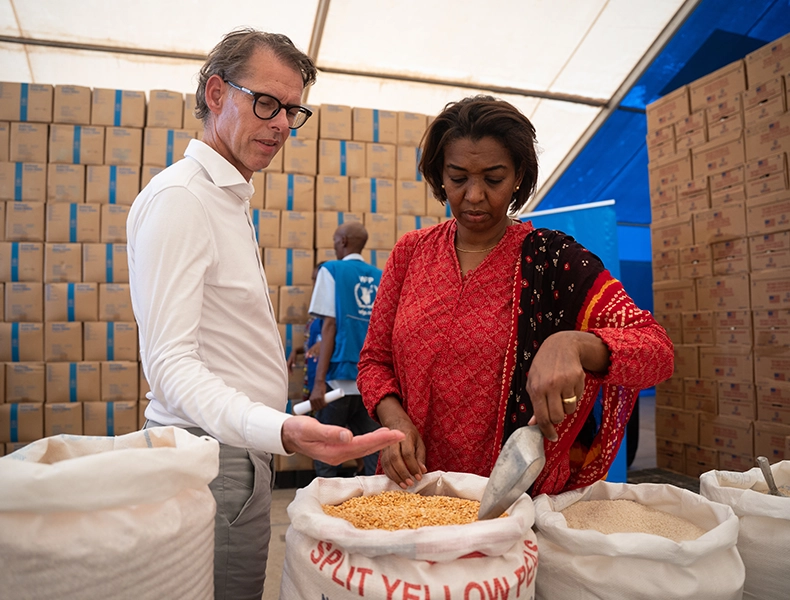
Supported by the Progress Foundation, our two-decade partnership with the World Food Programme (WFP) renewed in 2025 through to 2027. Our collaboration targets 60 million people in 32 countries, delivering fortified staples and specialized nutritious foods to improve diets and resilience in food-insecure regions. Combining cutting-edge nutritional science with WFP’s global reach, we are scaling solutions to fight hidden hunger and transform food systems worldwide.
Key achievements
In 2025, we reached 775 million beneficiaries with our nutrition improvement solution, started the development of rice fortification standards, and received UNICEF’s approval for our MMS production in South Africa.