


Climate change is one of the most pressing issues of our time. Urgent and decisive action is required to both mitigate its impact and adapt to the inevitable volatility the planet is experiencing now and will continue to experience in the future.
We acknowledge these challenges and will meet them head-on, shouldering our responsibility to accelerate climate action throughout our business, our value chain, and beyond. We have been, and will continue to be, an industry leader in both our commitment to ambitious climate targets and in our drive to deliver against these targets.
Our climate approach
Our climate approach, as detailed in the accompanying chart, focuses on climate change mitigation and climate change adaptation in our own operations and value chain. While we remain fully responsible for reducing our own emissions, the products and services we offer to our customers provide us with an opportunity to extend our impact beyond our own operations and supply chains, enabling large-scale global decarbonization through avoided emissions in the broader value chain, resulting in added value for our customers.
We have outstanding products such as Bovaer®, our methane-reducing feed additive for cattle, and our long-established Purifine® family of enzymatic solutions, which enable our customers to significantly decarbonize their own value chains. Our climate mitigation activities, aligned to the latest 1.5°C global warming science, include:
The reduction of direct emissions in our own operations (Scope 1 & 2) through operational efficiency improvements and our renewable energy transition strategy
The reduction of indirect emissions in our value chain by driving Scope 3 improvements through engaging and collaborating with our suppliers, driving additional value chain improvements and new designs and technology to reduce emissions
Collaborating with our customers to avoid emissions in their own operations through the products and services we offer
Ultimately, in alignment with Science Based Target initiative (SBTi) standards, using carbon removal technologies to deliver our net-zero target. However, we will not rely on carbon credits to achieve our near-term targets.
With respect to climate change adaptation, a risk-based approach helps us identify and assess risks and opportunities and thus where we need to build further resilience into our own operations and value chain.
|
|
Climate change mitigation |
|
Climate adaptation |
||||
|---|---|---|---|---|---|---|---|---|
|
|
Reducing our own emissions |
|
Reducing the emissions of others |
|
Increasing permanent carbon removals |
|
Increasing resilience |
In our own operations |
|
Reduce our direct emissions and renewable energy (Scope 1 & 2) |
|
Collaborative customer and consortia projects on renewable energy, waste, transport, etc. |
|
Carbon removals in our own operations |
|
Protect our operations from physical risks |
In our up- or downstream value chain |
|
Reduce our indirect emissions (Scope 3) |
|
Reduce the emissions of others through our products and services (avoided emissions) |
|
Carbon removals in our supply chains |
|
Protect key supply chains from physical risks and enable adaptation of others through our products |
Strategy
Transition plan
Climate is a core part of our Sustainability program. It is one of our key focus areas: Accelerating Climate Action. This means we are committed to reaching net zero ourselves, and to supporting our customers’ and suppliers’ climate journeys.
In 2024, to formalize how we would accelerate climate action, we developed our first Climate Transition Action Plan (CTAP) which will be updated as we mature in our climate journey and the market around us changes. This plan is intended to support the delivery of our broader climate agenda and to outline our strategy to transition to a low-carbon business. It focuses on both climate change mitigation and climate adaptation, aiming to reduce our carbon footprint while strengthening resilience to climate-related risks.
The CTAP, which remains a living document, was based on the guidance document from the CDP’s Technical Note: Reporting on Climate Transition Plans. It covers a wide range of topics including:
Strategy, including scenario analysis, financial planning, low-carbon initiatives, and policy engagement
Risk and opportunity management
Metrics and targets
Strategy implementation, including roadmaps with key decarbonization levers
Governance is also a key aspect of the CTAP, with the Board of Directors and the Executive Committee playing crucial roles in overseeing and implementing the sustainability strategy.
Since its inception, the CTAP has become the accepted terminology for how all functions in our business play their role in delivering our climate transition and meeting our aspiration of Accelerating Climate Action. The CTAP has been built bottom-up by the Business Units and relevant Business Partners – whether that be Sustainability, Procurement and Responsible Sourcing, Supply Chain or Group Operations – and firmly entrenched in how these functions operate. A high-level view of our overall net-zero roadmap, with targets and actions, can be seen in the graphic below.
Although the CTAP is comprehensive and covers climate mitigation and adaptation, avoided emissions and more, core to the CTAP are the roadmaps on how to deliver our Scope 1 & 2 and Scope 3 targets. These roadmaps help integrate our climate mitigation actions across the business and provide the basis to develop the financial plans to meet our commitments.
Based on these plans, we do not envision a requirement to fundamentally change our business model or strategy to meet these commitments, nor have we identified assets that are incompatible with a net-zero economy. We also do not expect material impacts on our own workforce. We furthermore conducted an initial qualitative review of locked‑in emissions, which did not identify any potentially material locked‑in emissions. Due to the nature of our economic activities, the alignment of our economic activities with the EU Taxonomy Regulation is not considered material to the company. dsm-firmenich is also not excluded from the EU Paris-Aligned Benchmarks.
Our net-zero roadmap
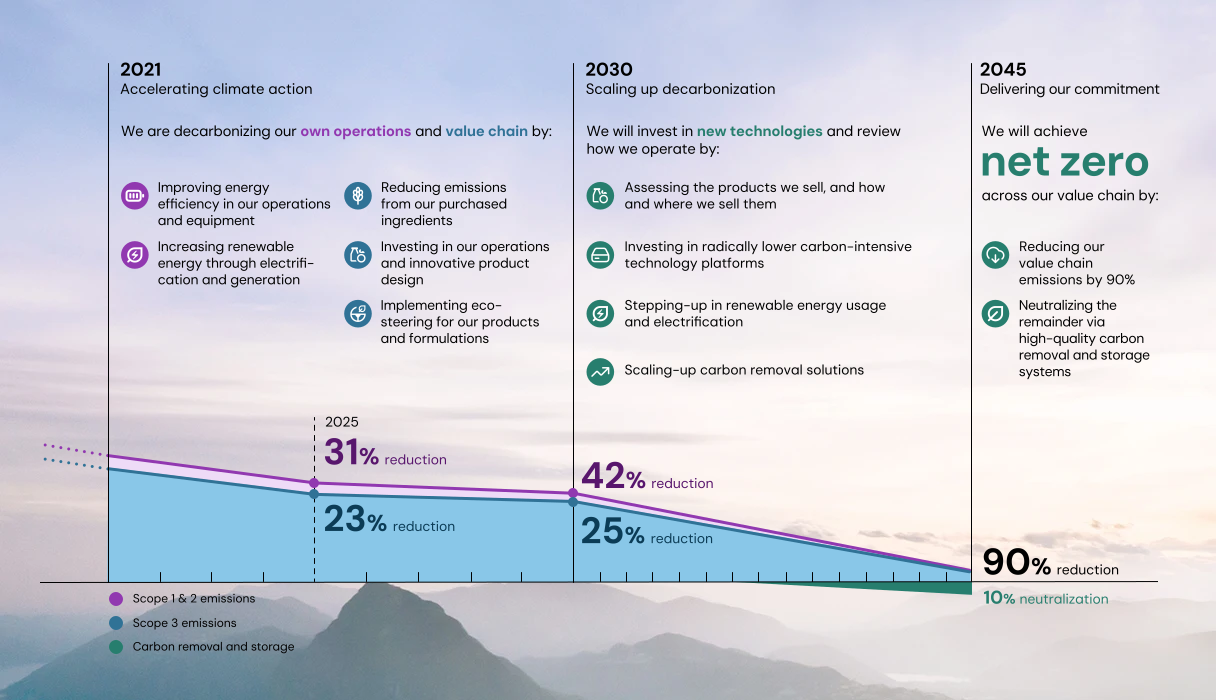
Note: The net-zero roadmap and targets include total dsm-firmenich. ANH is material to our emissions inventory and targets. The impact of this is being investigated and will be reported at a later stage.
Resilience Analysis
Scope of the resilience analysis
Managing the impact of climate change is integral to how we operate. In 2025, we performed an updated mapping of the processes we use to address material impacts, risks, and opportunities. While the mapping showed that we have a strong capacity to address our impacts, risks, and opportunities, nevertheless we identified areas to further strengthen and ensure business resilience.
A key aspect of managing our impacts, risks, and opportunities lies in our approach to assessing climate impacts and resilience analysis, which consists of two main components:
Conducting physical climate risk assessments is essential to safeguard our business from the impacts of climate change. Climate change poses direct threats across our operations and upstream supply chain. We identify physical risks, and mitigate these where necessary, to maintain continuity and resilience.
Assessing and managing climate transition risks and opportunities are critical to ensure that we navigate impacts from a transition to a net-zero world. By addressing these risks and opportunities, we secure the competitiveness of the business and position ourselves for long-term growth.
These assessments feed into the overall Enterprise Risk Management (ERM) Framework, allowing the business to highlight where aspects of the strategy may be at risk and where risk mitigation efforts are required. Our approach includes both qualitative and quantitative assessments, considering a range of climate scenarios and time horizons. Our approach covers total dsm-firmenich.
These processes are comprehensive, and we have an overarching approach to ensure that the outcomes are digested, monitored, and have appropriate follow-up. These assessments are grounded in climate scenarios that provide structured views of potential future conditions. By applying multiple scenarios across different time horizons, we ensure that identified risks and opportunities reflect a range of plausible climate pathways, strengthening the resilience of our strategy.
Climate scenarios
We use climate scenarios to assess risks and opportunities for our business, over various time horizons, up to 2050. The scope is not limited to our own operations but includes the impact along the full value chain. These scenarios are based on the Intergovernmental Panel on Climate Change (IPCC) framework, which integrates global climate model projections with Shared Socioeconomic Pathways (SSPs), providing a comprehensive view of future climate risks based on a number of several differentiated and plausible futures:
SSP1-2.6: Low emissions, aligned with Paris Agreement
SSP2-4.5: Middle of the road
SSP5-8.5: Fossil-fueled development, high emissions
We utilize IPCC scenarios because they are globally recognized, science-based, and ensure consistency and credibility across sectors. While other frameworks, such as the Network of Central Banks and Supervisors for Greening the Financial System (NGFS), are valuable for specific purposes such as financial sector stress testing, IPCC scenarios remain the most robust and widely adopted tools for evaluating long-term climate impacts on business strategy and value chains.
For transition to a net-zero world, we enrich the IPCC scenarios with forward-looking business context (e.g., regulations on land and/or water use, eco-footprint of products, shifts in consumption patterns) and insights from other sources, including International Energy Agency (IEA) scenarios, including ‘Net Zero by 2050’ limiting temperature increase to 1.5°C, and International Monetary Fund (IMF) scenarios. Additionally, for the transition scenarios, the ‘Middle of the road’ scenario also includes elements from SSP1, and the ‘Fossil-fueled development, high emissions’ scenario includes elements of SSP3.
Assessing climate risks and opportunities
Assessing climate risks in our business is a journey we began in 2020 and which continues today. As a complement to our efforts on climate change mitigation – reducing and stabilizing emissions to combat the root cause of climate change – we also assess the climate resilience of our assets and value chains.
We map the impact of physical climate change, upstream (suppliers, natural raw materials), within our operations, and downstream (end-market). The material risks identified through the physical and transition climate risk assessments are integrated and managed as part of our regular risk management processes.
Climate-related physical risks
For physical climate risk assessments, including climate change adaptation, we use desk studies for a high-level screening of physical hazards – for example, heatwaves, drought, flooding, precipitation, high winds, or wildfire (SSP2-4.5, SSP5-8.5). This gives us the major impact factors for our portfolio. We conduct on-site deep dives to obtain a more detailed understanding of actual risks for our assets. These consider the specifics of the site, using local “climate event site scenarios” over short-, medium-, and long-term time horizons.
To date, we have executed physical climate hazard screening for approximately 50% of our own manufacturing sites, prioritizing key sites. The screening identified heatwave, drought and extreme precipitation as the primary (future) hazards. Sites most potentially affected by heatwave and drought are in the US, France, the Netherlands, and Switzerland. Note that vulnerability was not a part of this climate hazard screening. We also completed an additional five on-site deep dives in 2025 to understand the future climate risks for our assets in greater detail. This brings our total of on-site deep dives to 18. We are using the results to improve business continuity planning as well as our water stewardship approach. More information is available in the Water and marine resources section.
We have also executed high-level screenings to assess impacts of physical climate hazards on our main supplier locations. To date, we have screened our key suppliers and identified heatwave, drought, and extreme precipitation as the primary (future) hazards. The supplier locations most potentially affected by heatwave and drought are in the US, China, Germany, France, and the Netherlands. The conclusions of the study were reviewed with the procurement team and serve as a basis for climate resilience discussions with our suppliers.
Climate-related transition risks
For climate transition risk assessments, we organize separate sessions, with input from experts and senior management, to assess risks and opportunities related to our transition to a net-zero economy (in areas such as policy and legal, technology, market and reputation). These risks and opportunities are assessed for each scenario over short-, medium-, and long-term time horizons.
In 2025, we executed new climate transition risk assessments for two of our Business Units. These assessments revealed both risks and opportunities by 2030, as well as some longer-term risks. Examples of potential risks from these assessments are GHG emission restrictions (of suppliers) and the impact of water regulations in the value chain. An example of potential opportunities uncovered by the assessments includes incentives to our customers to reduce their carbon footprint. The assessments are used as a basis for risk and incident reporting and for follow-up activities executed by the business.
The way forward
Building on the solid foundation we have established, we will continue to embed climate resilience into our strategic decisions and the way we operate. Our ability to adapt our strategy and business model to the realities of climate change is central to this approach. We have shown this by prioritizing decarbonization, investing in energy efficiency, and accelerating the transition to net zero. We have set science-based targets for GHG emission reduction, conduct regular climate risk assessments, and are implementing the CTAP, aligned with the Paris Agreement.
Each of our Business Units offers products or services that can help reduce the carbon footprint of our customers and downstream partners. More information can be found in Avoided emissions. Additionally, our Science & Research teams have ensured a strong pipeline to meet the ever increasing demand for these products and services.
We nevertheless realize that we cannot achieve climate resilience in a silo, and that macroeconomic conditions, technology availability, and other external factors impact our ability to deliver. To address these risks and realize opportunities, we engage in advocacy and industry collaboration to help shape external conditions necessary for achieving our climate ambitions.
Impact, risk, and opportunity management
Actions and resources
Our actions, as detailed in our CTAP and displayed in the net-zero roadmap above, are unpinned by a broader commitment to deploying the resources and capital to the identification and implementation of projects to reduce our emissions across the full value chain. Our actions are organized across 5 key decarbonization levers, including some 20 sub-levers, covering our own operations and value chains.
Reducing our operational emissions – Scope 1 & 2
To deliver on our Scope 1 & 2 target of reducing absolute emissions by 42% from a 2021 baseline, we have developed a rigorous and continuous process of identifying and implementing new initiatives to lower our own emissions. This has been very successful over the past few years. It builds on two parallel activities:
-
The identification of site improvement opportunities (e.g., site deep dives and energy scans)
-
Reviewing the deployment of sustainable technologies (e.g., energy dashboarding and monitoring, and heat pumps)
These activities culminate twice a year in a detailed, bottom-up Scope 1 & 2 GHG roadmap. This is organized by site, by Business Unit, and at Group level, and evaluates the gaps and resources necessary to close those gaps. Implementation is reviewed throughout the year and built into the annual financial planning and CapEx allocation cycle. Our roadmap toward our Scope 1 & 2 target consists of two levers, expected to contribute in similar proportion:
-
Reducing our energy consumption through energy efficiency measures
-
Transitioning toward renewable energy over time, with an initial focus on increasing the amount of purchased renewable electricity
The implementation of roadmap projects that reduce GHG emissions is supported by a yearly ring-fenced CapEx budget. Based on our 2030 Scope 1 & 2 GHG roadmap, we estimate an average investment of €10–25 million per year for the period 2025–2030 to achieve our ambition. Investments are selected in such a way as to also bring about reductions in OpEx, and a review process aims at minimizing the investments while maximizing cost savings together with GHG savings.
Scope 1 & 2 reduction lever |
|
Sub-levers |
|
Example solutions and technologies |
|---|---|---|---|---|
Energy efficiency |
|
Operation optimization and transparency |
|
|
|
Basics in place |
|
|
|
|
State of the art equipment |
|
|
|
|
Process optimization |
|
|
|
Renewable energy |
|
Smart electrification |
|
|
|
Purchased renewable electricity, heat and fuel |
|
|
|
|
Self-generated renewable electricity, heat and fuel |
|
|
1 – Toward more energy efficient sites
A key lever of our Scope 1 & 2 GHG reduction roadmap involves reducing our operational energy consumption by being more efficient. Various solutions and technologies are being implemented to support this transition. These are described in the accompanying table.
A team of experts works with our production sites to identify opportunities to implement these technologies. This collaboration and the development of site roadmaps, combined with the transition to renewable energy, forms the basis of our Scope 1 & 2 GHG roadmap. The implementation of this multi-year project portfolio is projected to deliver average annual reductions of 20 to 30 kt CO2e.
In our 2025 results, the GHG reduction contribution from this program is linked mainly to the roughly 30 projects implemented in 2024 or early 2025 across the world, representing an investment of approximately €10 million in 2024. These include:
Upgraded boilers in Kingstree (South Carolina, USA), saving ~3.5ktCO2e
The roll-out of our digital program with, for example, a new energy dashboard in Leon (Spain), saving ~0.3ktCO2e
Steam trap monitoring completion in Grenzach (Germany), saving ~1.5ktCO2e
The heat recovery project in Brotas (Brazil), saving 0.5ktCO2e
In 2025, we continued to invest in the energy efficiency of our operations, implementing a comparable number of projects and a comparable level of investment. We completed:
The installation of new chillers to reduce refrigerant leakages in Zhangjiagang (Jiangsu province, China) and Sydney (Australia), expected to save ~5ktCO2e
The installation of heat pumps in Minhang (Shanghai, China) and Xinghuo (Shanghai, China), saving ~2ktCO2e
A steam network upgrade in Port Newark (New Jersey, USA), saving ~2ktCO2e
Energy efficiency improvements arise from the development and implementation of multi-year project plans that are continuously improved to generate maximum savings per investment, thereby supporting business resilience. Energy efficiency projects may be wide-ranging in nature. They include the optimization of processes, ensuring that basics (such as insulation or heat recovery) are in place, the implementation of best-available techniques in support of innovation, and the implementation of digital solutions.
2 – Renewable energy
In 2025, we reached a major milestone in our climate journey, with 100% of our purchased electricity, representing 125 GWh, now coming from renewable sources. Our commitment as a member of RE100 (the Climate Group’s initiative comprising leading companies that have committed to obtaining 100% electricity from renewable sources as early as possible and via credible claims) has been reached as per plan.
In accordance with strict RE100 technical criteria, this achievement was reached by switching to renewable electricity via long-term power purchase agreements (PPAs), local retail contracts and, where not possible, local unbundled Energy Attribute Certificates (EACs).
This is the result of hard work over many years to build robust contracts with multiple partners, for instance:
For North America: Several long-term virtual power purchase agreements (VPPAs), with one wind park and one solar park in operation since 2024, and another solar park expected to be in operation in 2026
For Europe: Long-term wind and solar VPPAs/PPAs in Spain and the Netherlands, hydro-blocks in Switzerland and several local retail contracts
For China: Several long-term contracts in Shanghai, Jiangsu, Jilin and Inner Mongolia provinces completed, with short-term contracts in other provinces
The main improvement in 2025 – beyond maintaining the already achieved renewable electricity volumes – has been in developing renewable electricity contracts to supply Yantai (Shandong province, China) and Yimante (Hubei province, China) with renewable electricity and unbundled EACs.
In addition to renewable electricity, we are also active in developing further renewable fuel and heat solutions for our operations. Besides sites that continue to use renewable or low-carbon sources for steam and heat, such as plants in Switzerland, France, China, India and Brazil, a major milestone was reached for our pectin production site in Yantai (Shandong province, China) where at the end of 2025 the steam supply was switched to biomass partially based on our production waste streams, increasing our share of renewable energy and significantly reducing our Scope 1 & 2 GHG emissions.
We are working to further develop options to turn fuel and heat into renewable sourcing through electrification (such as through heat pumps or mechanical vapor recompression projects), optimizations in the use of waste streams, and, in collaboration with external providers, the development of energy transition plans.
Reducing our value chain emissions – Scope 3
Scope 3 emissions, our indirect value-chain emissions, constitute over 90% of our total GHG emissions, making value-chain decarbonization a strategic priority.
We implement internationally recognized standards to guide our Scope 3 decarbonization agenda. Emissions are calculated according to the GHG Protocol’s Corporate Value-chain Accounting Standard, and we adhere to SBTi criteria for target-setting and progress tracking. This provides consistency and credibility in how we measure and address Scope 3 emissions and claim reductions.
To enhance the accuracy and transparency of our Scope 3 emissions reporting, we have continued investing in 2025 in advanced digital solutions that integrate data from procurement, logistics, and product systems into a unified platform. This approach enables controlled data collection, consistent application of emission factors, and clear tracking of assumptions and data quality. We also digitalized the collection of primary emissions data. Primary data is more accurate and reliable because it is supplier- and activity-specific, current, and based on actual value-chain data, leading to emission estimates with significantly lower uncertainty than secondary data. Primary data undergoes a thorough LCA review before it is incorporated into our corporate footprint.
Digitalization allows us to progressively increase the use of primary, supplier-specific data, improve traceability for assurance, and model scenarios to guide business decisions. By building stronger reporting capabilities, we not only improve transparency but also create a practical lever for driving real-world emissions reductions.
In 2025, we made considerable progress in building our Scope 3 reduction delivery routes to complement the extensive work on developing our Scope 3 reporting capability. Through a collaborative process between our Business Units and Business Partners (including Procurement, Science and Research, Group Sustainability) each Business Unit developed a bottom-up Scope 3 decarbonization roadmap. This is then consolidated into a Group-level plan to be included in the CTAP and to determine progress toward our Group SBTi target. The roadmap allows us to prioritize our Scope 3 projects, evaluate the gaps, and secure resources to close gaps.
Our roadmap toward our Scope 3 target consists of three broad levers, as shown in the accompanying table.
Scope 3 reduction lever |
|
Sub-levers |
|
Details |
|---|---|---|---|---|
Purchased ingredients |
|
Sourcing of low-carbon raw materials or ingredients |
|
Sourcing low-carbon materials from alternative suppliers or stream of supply (e.g., waste) |
|
Efficiency improvement |
|
Efficiency improvements with suppliers (e.g., raw material and energy) |
|
|
Renewables and electrification |
|
Renewable sources of energy for electricity and/or heat at suppliers |
|
|
Regenerative agriculture |
|
Regenerative agriculture (e.g., no tillage, green fertilizer, etc.) practices at suppliers |
|
|
Deforestation-free |
|
Sourcing agricultural ingredients from verified deforestation-free areas. |
|
|
Biotechnology |
|
Using biotech routes (e.g., fermentation, enzymes) to produce ingredients with lower energy use and footprint |
|
Operation and innovation |
|
Process optimization |
|
Optimization of production or supply chain process (e.g., better yield, energy reduction, route optimization in logistics) |
|
Waste reduction |
|
Reducing waste and implementation of improved waste management practices |
|
|
Low-carbon design for products and process |
|
New low-carbon material and production technologies |
|
Eco-steering |
|
Portfolio management |
|
Strategic steering of product and portfolio mix |
|
Eco switches |
|
Improved product composition and reformulating ingredients to lower their carbon intensity |
Purchased ingredients
A significant portion of our Scope 3 emissions comes from our raw materials, our ingredients, and the intermediates we purchase from our suppliers. To address these emissions, a team of cross-functional experts identified and assessed cost-effectiveness and feasibility in order to prioritize initiatives.
To achieve the required emissions reductions across purchased ingredients, but also our broader upstream value chains, we accelerated the rollout of our Join Forces supplier engagement for Climate in 2025. For more information, see Engaging with our supply chain in General information.
In 2025, we:
Accelerated engagement with high-emitting and high-spend suppliers to set their own Science-Based Targets (SBTs)
Expanded primary data collection
Advanced decarbonization plans for top emitters, as referenced above, enhancing our actions to assess cost and feasibility to build business cases and prioritize initiatives
Upskilled suppliers by offering capability-building training on SBTs and product carbon footprint calculation, delivered in partnership with the World Business Council for Sustainable Development (WBCSD)
Integrated climate action into our policies and standards, and our procurement managers were evaluated against climate objectives to ensure the integration of climate considerations into suppliers’ allocation decision-making and relationship management. We also launched a large-scale procurement community climate upskilling program, training procurement managers on climate urgency, emissions measurement, and reduction strategies
Finally, as we believe there is no impact at scale without collaboration, in 2025 we accelerated our collaboration with key external organizations – including WBCSD’s Partnership for Carbon Transparency (PACT) framework and Together for Sustainability (TfS) – working with industry stakeholders to drive collective action on Scope 3 reductions. This cooperation supports alignment across value chains and enhances the effectiveness of our supplier decarbonization efforts.
Operations and innovation
Across our operations, we innovate and enhance efficiency by streamlining production processes to maximize yield, minimize waste, and ultimately reduce raw material consumption.
Internal fuel- and energy-related activities (Scope 3.3) and waste generated in operations (Scope 3.5) are also included in our Scope 3 targets. Operational efficiency improvements can also result in a reduction in fuel- and energy-related emissions. These follow roadmaps developed and steered by our operations teams with a view to increasing overall site energy efficiency, as described earlier in this chapter.
Our supply chain team is also working on our network redesign, which will enhance our emissions reduction efforts in transportation and distribution emissions (Scope 3.4) by improving consolidation and route optimization, in addition to primary benefits in the transportation network.
Eco-steering
Eco‑steering or eco‑design refers to the redesign of products and reformulation of ingredients to lower their carbon intensity, for example, by leveraging biotech routes or incorporating recycled content where feasible. This lever also includes strategically steering our product portfolio toward lower‑carbon alternatives. Expanding the use of eco‑steering and eco‑design presents a significant opportunity to accelerate emissions reduction by scaling lower‑carbon product innovations and shifting our portfolio mix toward more sustainable solutions.
Scope 3 mitigation projects in 2025
Across these three levers, there were many projects in 2025 that helped deliver against our Scope 3 target. Some examples of these are:
In our natural mint supply chain, we were able to reduce emissions through the introduction of sustainable practices such as switching from synthetic to organic fertilizers, replacing diesel irrigation pumps with electric systems, and, most impactfully, transitioning from coal to biomass for heat distillation
Through our continued efforts to build on the transparency and quality of our collected primary data, we were able to capture the decarbonization efforts and achievements of key suppliers for products such as niacinamide and niacin
In our upstream transportation and distribution category, we saw a reduction which was largely driven by the intentional reduction in airfreight volumes, complemented by ongoing optimization efforts in consolidation and route planning
Further projects will be implemented in 2026 once the relevant data has been analyzed
Innovations toward net zero
In 2025 we launched an internal call for proposals under our newly implemented Big Sustainability Bets program. This program invites bold, disruptive ideas to reduce GHG, far beyond incremental change. This initiative ignited our scientific community, demonstrating the power of collaboration and innovation by bringing together diverse teams across science, research and innovation to tackle some of the most pressing decarbonization challenges.
The outcome is a robust portfolio of transformative concepts – spanning breakthrough product designs and pioneering process innovations – that hold the potential to deliver significant impact on our journey to net zero. Beyond the proposals themselves, which in our first round surfaced over 20 new projects, this effort has strengthened connections, fostered knowledge exchange, and reaffirmed our collective commitment to driving meaningful change for People and Planet.
Avoided emissions
We also give increased attention to identifying, developing and strengthening the products that can create impact through avoided emissions. These are emissions that are not part of our own Scope 1, 2 or 3, but which can be reduced due to our unique product performance. The way in which avoided emissions are realized varies based on the unique challenges facing our end markets and how our products are applied to help solve them.
We use Life Cycle Assessment (LCA) studies to quantify and substantiate the benefits of avoided emissions enabled by our products when sufficient reliable data is available. Through LCA, we calculate the measurable GHG emissions reductions of our solutions in the downstream value chain. The reductions are demonstrably attributable to the solution and compared to a reference scenario with the mainstream solution currently available. The reference should always have comparable functionality to the products we are modelling. The LCA’s are performed according to ISO 14040/14044 methodology and the dsm-firmenich LCA Policy and validated by internal or external experts as required.
In 2025, WBCSD issued their updated Guidance on Avoided Emissions – Helping business drive innovations and scale solutions toward net zero. This updated version “…is a pivotal step towards integrating avoided emissions and intervention-based impact accounting into globally recognized carbon accounting standards. It now includes refined definitions and more detailed methodologies in key areas such as data quality, impact monitoring, and reporting – offering enhanced practical guidance for both businesses and investors” (WBCSD, 2025).
To test this guidance, and how it could be applied to a broader range of dsm-firmenich products in the future, in 2025 we piloted the new guidance. The pilot showed that the new guidance can be used to address the challenges of calculating avoided emissions in a rigorous and harmonized way, with our intention to secure third-party validation in 2026.
Although we intend to mature our calculation methodology and disclosure of avoided emissions through this pilot, it is not yet finalized and therefore any disclosure of avoided emissions in this Report is based on calculations made by the respective product teams. We provide a varied set of examples each year to illustrate the potential impact across different businesses. As our methodology matures — including external validation of selected cases — we will refine and expand our disclosures, while keeping avoided emissions separate from our Scope 1–3 accounting.
Bovaer® continues to play a transformative role in reducing methane emissions across the agricultural value chain, with cumulative avoided emissions of more than 500 ktons of CO2e by the end of 2025. By significantly reducing emissions, it provides a scalable, science-based solution to one of agriculture’s most critical environmental challenges: climate change mitigation and advancing sustainable farming practices. In 2025, Bovaer® continued to make substantial progress in its global rollout, gaining regulatory approvals in key markets and reaching more farmers worldwide. Now present in 68 countries, it is bringing the vision of more sustainable dairy and beef farming closer to reality. In recognition of its impact, Bovaer® was endorsed in 2025 by the Food and Agriculture Organization (FAO) as an “outstanding demonstration of innovation in advancing sustainable livestock transformation,” highlighting its measurable environmental performance and contribution to sustainable dairy and beef production.
Our long-established Purifine® family of enzymatic solutions is proven to help obtain greater yield from vegetable oils and biodiesel. The yield of the oil refining process as its eco-footprint can be improved by using enzymes to replace traditional treatments in the production process. Purifine® 3G, Purifine® LM and Purifine® PLA1 together helped our customers to reduce their GHG emissions by approximately 95 kt of CO2e in 2025. This happens without any impact on the desired properties of the end-product.
We further support downstream efforts by sharing our carbon footprint through Environmental Product Declarations (EPDs), Imp’Act Card™, and Ecotools for our businesses. We explore new innovations, such as the low-carbon sweetener, EverSweet®, our low-carbon vitamin C, Quali®-C, and even the recycling of toluene at our site in La Plaine (Switzerland). Our dedication to sustainability extends into our product range, where we actively engage in the eco-design of fragrances and flavor solutions with low-carbon emissions, utilizing our digitally integrated tools EcoScent Compass® and EcoFood Compass®.
Metrics and targets
Our commitments
In October 2024, we received validation of our climate targets by the SBTi. SBTi is an independent and leading global authority that evaluates and validates companies’ climate targets. The criteria are that these climate targets must be science-based and must align with the Paris Agreement (a global agreement that aims to limit global warming by 1.5OC). These near- and long-term science-based targets following the net-zero standard reconfirm our ambition of being a climate leader. With these new targets, we are committed to:
Reach net-zero greenhouse gas emissions across the value chain by 2045
Reduce absolute Scope 1 & 2 emissions by 42% by 2030 from a 2021 base year
Increase active annual sourcing of renewable electricity from 76% in 2021 to 100% by 2025 and to continue active annual sourcing of 100% renewable electricity through 2030
Reduce absolute Scope 3 GHG emissions by 25% by 2030 from a 2021 base year (from purchased goods and services, fuel- and energy-related activities, upstream transportation and distribution, and waste generated in operations)
As a key requirement of committing to being a net-zero company by 2045 across our full value chain, we aim for a minimum decarbonization reduction of 90% across all scopes versus a 2021 baseline. In setting a baseline for SBTs, it was necessary to balance the requirements set by the SBTi and select a year which best represented our business reality. 2021 was selected, as it was a year for which we had complete data available for our legacy companies, as well as being post-Covid and prior to the disruption in the vitamin market. Our decarbonization efforts focus on avoiding and mitigating GHG emissions. However, we will also look to neutralize any unavoidable residual emissions by means of carbon removals, using nature-based or other industrial-based solutions.
Additionally, to enable the delivery of our 25% Scope 3 GHG emissions reduction, internal leading indicators have been set. These include supplier spend with Science-Based Targets and suppliers with primary data coverage.
ANH represents a significant part of our current GHG inventory and a large part of the progress we have made against our current SBTs is due to reductions realized in ANH. The carve-out will therefore materially impact our overall reported GHG inventory as well as reduce the progress versus our 2021 baseline. This impact is currently being assessed and will be reported at a later stage.
Progress
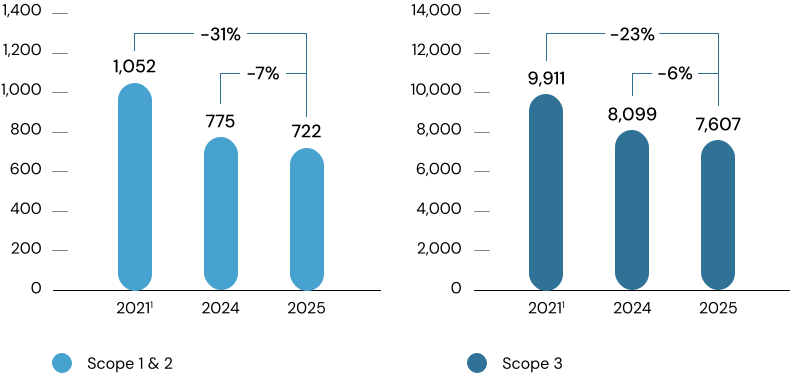
In 2025 we continued to make good progress with regard to our climate targets. Our realizations in 2025, versus our 2021 baseline and the 2025 trajectory, are presented in the accompanying table.
SBT Scope |
|
Baseline |
|
Target |
|
Trajectory 2025 |
|
Reduction to 2025 |
|
2021 emissions SBT (ktCO2e) |
|
2025 Emissions SBT (ktCO2e)[RA] |
|---|---|---|---|---|---|---|---|---|---|---|---|---|
Scope 1 & 2 |
|
2021 |
|
2030 |
|
-18.7% |
|
-31.4% |
|
1,052 |
|
722 |
Scope 3 |
|
2021 |
|
2030 |
|
-11.1% |
|
-23.2% |
|
10,723 |
|
8,225 |
In 2025, our Scope 1 & 2 market-based GHG emissions[RA] amounted to 722 kt CO2e, of which 582 kt CO2e related to Scope 1 emissions and 140 kt CO2e related to Scope 2 emissions. These emission levels (excluding assets that were divested in 2024) represent a 31.4% reduction versus our 2021 baseline.
Our absolute Scope 3 reduction corresponds to a 23.2% reduction against the 2021 baseline, which was driven by procured volume reduction guided by focused product steering. The primary driver of the year-on-year reduction is in Scope 3.1 (purchased goods and services), with purchased volumes 13% lower compared to the 2021 baseline. Purchased volumes for direct raw materials were similar to 2024, which is the largest driver of emissions..
In our upstream supply chain, our Procurement team increased the share of spend covered by SBT-verified suppliers by more than 7% year-on-year, reaching 36.2% of total spend, or the equivalent of 26% of Scope 3.1 emissions. In addition, using SiGreen, an industry-recognized data and decarbonization platform, we improved the collection of primary data from our most mature suppliers. As a result, 16% of our emissions are now supported by primary data (up from 13% at the beginning of 2025).
2025 SBT inventory performance versus previous year and the 2021 baseline
kt CO2e
Removals and carbon credits
We do not currently implement significant GHG removals or mitigation projects or finance climate change mitigation activities through carbon credits. However, to progress our Nature agenda, we engage in beyond-value-chain mitigation projects with the Livelihoods Funds. These generate a limited amount of carbon credits each year. No carbon credits generated were retired in 2025. See Biodiversity and ecosystems for more information.
Internal carbon pricing
Our Internal Carbon Pricing (ICP) is a key tool for addressing climate-related risks by assigning a financial value to our emissions. This helps us make informed decisions to reduce our carbon footprint, protect ecosystems in our.value chain, and meet expectations from investors, customers, and regulators.
In 2025, to be more proactive in our actions and decision-making processes, we reimplemented and reinforced our ICP processes as a critical element of our business case assessments. This will allow us to:
Clearly evaluate the impact of carbon emissions
Make informed investment decisions that align with our sustainability commitments
Our framework currently focuses on Scope 1 & 2 emissions.
The current carbon price is set at €100 per metric ton of CO2, driven by both economic and environmental considerations. The carbon price has been set by looking to recommendations from the High-Level Commission on Carbon Prices and trading ranges of the European Trading Scheme (ETS) as well as benchmarks from other companies that have implemented a carbon price. The price will be reevaluated on a periodic basis to ensure that it remains aligned with market developments, regulatory changes, and emerging best practice.
The scope of the ICP covers large CapEx processes (within manufacturing, commercial, and real estate and workplace) coordinated through the Group Investment Committee (GIC). Additionally, projects within the company should, at minimum, not increase GHG emissions (among other things, by assessing best available techniques with respect to energy consumption/GHG footprint minimization). In the event this is not (economically) feasible, the absolute emissions growth should be compensated by measures in the same Business Unit (within a three-year timeframe).
Energy
|
|
2025 |
|
2024 |
||||||||
|---|---|---|---|---|---|---|---|---|---|---|---|---|
|
|
TJ |
|
MWh |
|
TJ |
|
MWh |
||||
Total (net) energy consumption |
|
|
|
|
|
|
|
|
||||
Total (net) primary energy consumption |
|
16,740 |
|
4,660,300 |
|
17,100 |
|
4,753,800 |
||||
|
|
|
|
|
|
|
|
|
||||
Total fuel consumption |
|
9,500 |
|
2,641,000 |
|
10,000 |
|
2,780,000 |
||||
– Fossil sources |
|
9,100 |
|
2,529,800 |
|
9,600 |
|
2,668,800 |
||||
– Coal and coal products |
|
0 |
|
0 |
|
0 |
|
0 |
||||
– Crude oil and petroleum products |
|
100 |
|
27,800 |
|
200 |
|
55,600 |
||||
– Natural gas |
|
8,000 |
|
2,224,000 |
|
8,300 |
|
2,307,400 |
||||
– Other fossil sources |
|
1,000 |
|
278,000 |
|
1,100 |
|
305,800 |
||||
– Renewable sources including biomass |
|
400 |
|
111,200 |
|
400 |
|
111,200 |
||||
|
|
|
|
|
|
|
|
|
||||
Total electricity purchased |
|
4,500 |
|
1,256,000 |
|
4,300 |
|
1,206,000 |
||||
– Purchased or acquired electricity from fossil sources |
|
|
|
0 |
|
|
|
61,200 |
||||
– Purchased or acquired electricity from renewable sources |
|
|
|
1,256,000 |
|
|
|
1,144,700 |
||||
|
|
|
|
|
|
|
|
|
||||
Self-generated non-fuel renewable energy with ownership1 |
|
40 |
|
11,300 |
|
40 |
|
11,300 |
||||
|
|
|
|
|
|
|
|
|
||||
Total purchased heat |
|
3,400 |
|
945,200 |
|
3,400 |
|
945,200 |
||||
– Purchased or acquired heat, from fossil sources |
|
2,000 |
|
556,000 |
|
2,100 |
|
583,800 |
||||
– Purchased or acquired heat from renewable source |
|
1,400 |
|
389,200 |
|
1,300 |
|
361,400 |
||||
|
|
|
|
|
|
|
|
|
||||
Total energy exported |
|
700 |
|
194,600 |
|
900 |
|
250,200 |
||||
– Non-renewable + renewable electricity, exported |
|
|
|
109,800 |
|
|
|
154,300 |
||||
– Total heat exported |
|
300 |
|
83,400 |
|
300 |
|
83,400 |
||||
|
||||||||||||
(MWh/million euros) |
|
2025 |
|
2024 |
|
year-on-year change |
||||
|---|---|---|---|---|---|---|---|---|---|---|
Energy intensity per net revenue1 |
|
375.2 |
|
371.4 |
|
1.0% |
||||
|
||||||||||
Greenhouse gas emissions
Our Scope 1 & 2 emissions arise primarily in our manufacturing sites, pre-mix sites, distribution centers, offices, labs and research sites due to activities such as the combustion of fuel (e.g., for process heating) and the purchase of heat. Scope 1 & 2 represents less than 10% of our footprint, and significant effort has gone into reducing our consumption of non-renewable energy and transitioning toward renewable energy sources.
Scope 3 emissions, which account for most of our Group GHG footprint, are the result of the emission footprint of our upstream supply chain producing the goods and services we require to manufacture our products. Other sources include in- and out-bound logistics, operational waste, and the emissions that are downstream in the use of our products.
Almost all the 15 Scope 3 categories are used in the calculation of our GHG inventory, in accordance with the GHG protocol. Category 13: Downstream leased assets and Category 14: Franchises are deemed immaterial, and consequently not reported, based on the Guidance for Accounting & Reporting Corporate Emissions in the Chemical Sector Value Chain for Scope 3 reporting, as published by the WBCSD. The following four emissions categories are relevant to the near-term SBTi targets:
Category 1: Purchased goods and services
Category 3: Fuel and energy-related activities
Category 4: Upstream transportation and distribution
Category 5: Waste generated in operations
|
|
Base year (2021) |
|
2024 |
|
2025 |
|
year-on-year change |
|
2030 |
|
2045 |
|
Annual % target/ |
||||||||||||
|---|---|---|---|---|---|---|---|---|---|---|---|---|---|---|---|---|---|---|---|---|---|---|---|---|---|---|
(x 1,000 tonnes) |
|
|
|
|
|
|
|
|
|
|
|
|
|
|
||||||||||||
|
|
|
|
|
|
|
|
|
|
|
|
|
|
|
||||||||||||
Scope 1 & 2 CO2e emissions (market-based)1 |
|
1,051.8 |
|
775.4 |
|
721.7 |
|
-6.9% |
|
610.0 |
|
|
|
-4.7% |
||||||||||||
Total Scope 1 CO2e emissions[RA] |
|
|
|
|
|
|
|
|
|
|
|
|
|
|
||||||||||||
– Gross Scope 1 CO2e emission1 |
|
|
|
605.7 |
|
581.7 |
|
-4.0% |
|
|
|
|
|
|
||||||||||||
– Emissions from regulated emissions trading schemes2 |
|
|
|
268.0 |
|
245.0 |
|
|
|
|
|
|
|
|
||||||||||||
Total Scope 2 CO2e emissions[RA] |
|
|
|
|
|
|
|
|
|
|
|
|
|
|
||||||||||||
– Market-based1 |
|
|
|
169.7 |
|
140.0 |
|
-17.5% |
|
|
|
|
|
|
||||||||||||
– Location-based |
|
|
|
476.9 |
|
464.3 |
|
-2.6% |
|
|
|
|
|
|
||||||||||||
|
|
|
|
|
|
|
|
|
|
|
|
|
|
|
||||||||||||
Total biogenic CO2 emissions from combustion of biofuels |
|
|
|
34.4 |
|
33.0 |
|
|
|
|
|
|
|
|
||||||||||||
|
|
|
|
|
|
|
|
|
|
|
|
|
|
|
||||||||||||
Scope 3 CO2e emissions3 [RA] |
|
|
|
10,649.5 |
|
10,280.1 |
|
-3.5% |
|
|
|
|
|
|
||||||||||||
SBT Scope 3 emissions4 |
|
9,910.8 |
|
8,098.6 |
|
7,607.1 |
|
-6.1% |
|
7,433.1 |
|
|
|
-2.8% |
||||||||||||
– 1 Purchased goods and services |
|
|
|
8,242.2 |
|
7,728.5 |
|
-6.2% |
|
|
|
|
|
|
||||||||||||
– 3 Fuels |
|
|
|
201.5 |
|
197.8 |
|
-1.8% |
|
|
|
|
|
|
||||||||||||
– 4 Transport & Distribution |
|
|
|
244.7 |
|
237.7 |
|
-2.9% |
|
|
|
|
|
|
||||||||||||
– 5 Waste treatment |
|
|
|
69.6 |
|
61.4 |
|
-11.8% |
|
|
|
|
|
|
||||||||||||
Other categories |
|
|
|
1,891.5 |
|
2,054.7 |
|
8.6% |
|
|
|
|
|
|
||||||||||||
– 2 Capital goods |
|
|
|
289.2 |
|
376.1 |
|
30.0% |
|
|
|
|
|
|
||||||||||||
– 6 Business travel5 |
|
|
|
18.2 |
|
16.5 |
|
-9.3% |
|
|
|
|
|
|
||||||||||||
– 7 Employee commuting |
|
|
|
38.4 |
|
38.9 |
|
1.3% |
|
|
|
|
|
|
||||||||||||
– 8 Leased assets |
|
|
|
21.2 |
|
21.0 |
|
-0.9% |
|
|
|
|
|
|
||||||||||||
– 9 Transport & Distribution |
|
|
|
101.2 |
|
154.4 |
|
52.6% |
|
|
|
|
|
|
||||||||||||
– 10 Processing of sold products |
|
|
|
268.2 |
|
304.0 |
|
13.3% |
|
|
|
|
|
|
||||||||||||
– 11 Use of sold products5 |
|
|
|
– |
|
– |
|
|
|
|
|
|
|
|
||||||||||||
– 12 End-of-life treatment |
|
|
|
877.0 |
|
912.3 |
|
4.0% |
|
|
|
|
|
|
||||||||||||
– 15 Investments |
|
|
|
278.1 |
|
231.5 |
|
-16.8% |
|
|
|
|
|
|
||||||||||||
|
|
|
|
|
|
|
|
|
|
|
|
|
|
|
||||||||||||
Total CO2e emissions |
|
|
|
|
|
|
|
|
|
|
|
|
|
|
||||||||||||
– Market-based1 |
|
|
|
11,424.9 |
|
11,001.8 |
|
-3.7% |
|
|
|
-90% |
|
|
||||||||||||
– Location-based |
|
|
|
11,732.1 |
|
11,326.1 |
|
-3.4% |
|
|
|
|
|
|
||||||||||||
|
||||||||||||||||||||||||||
(1,000 tonnes/million euros) |
|
2025 |
|
2024 |
|
year-on-year change |
||||
|---|---|---|---|---|---|---|---|---|---|---|
GHG intensity (market-based)1 |
|
0.88 |
|
0.89 |
|
-1.1% |
||||
GHG intensity (location-based) |
|
0.90 |
|
0.92 |
|
-2.2% |
||||
|
||||||||||